

Blog
Best Things to Do in Córdoba 2026: 15 Must-See Attractions

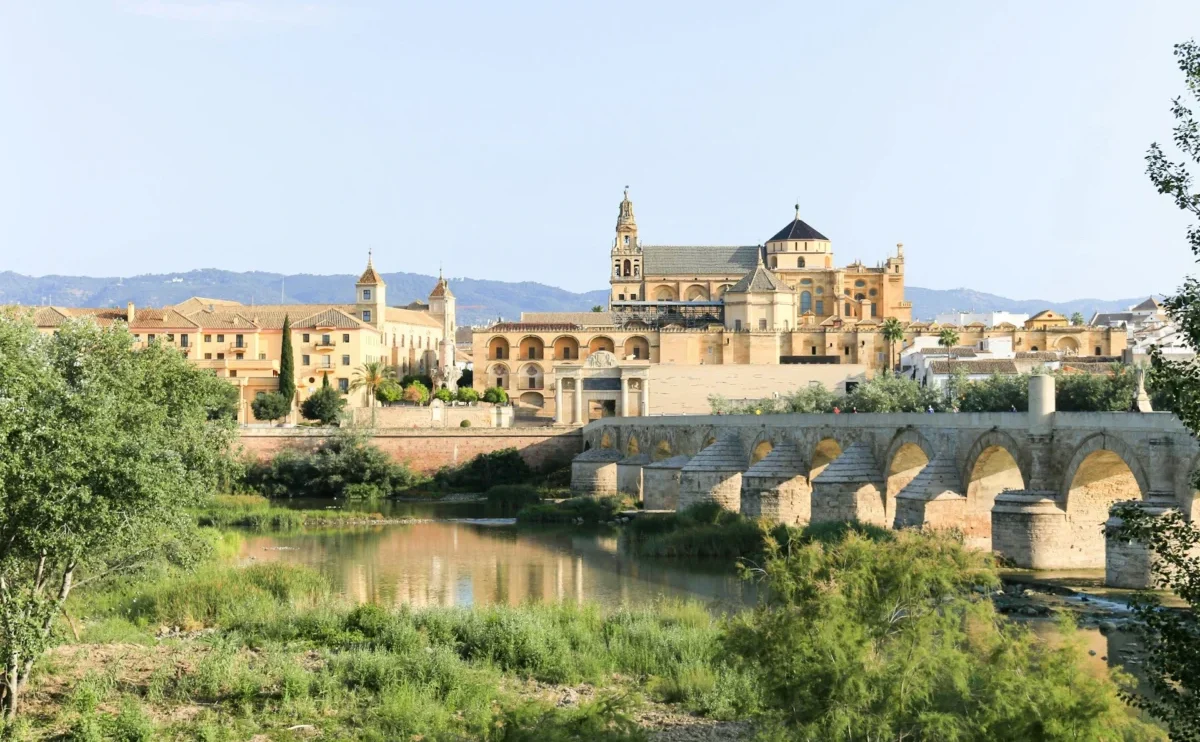
Looking for the best things to do in Córdoba? This historic Andalusian city is famous for its Islamic architecture, flower-filled courtyards, Roman heritage, traditional tapas, and charming old streets. Once one of the most important cities in medieval Europe, it remains one of the most rewarding stops in southern Spain.
The headline sight is the Mosque-Cathedral of Córdoba, a UNESCO World Heritage Site known for its red-and-white arches. Just outside the city, the ruins of Medina Azahara are also UNESCO-listed, and the city’s traditional patios are recognized by UNESCO too. This guide covers 15 attractions grouped by theme, with addresses, hours, admission details, how to get there, and a ready-made one-day itinerary.
Whether you’re on a day trip from Seville, a weekend in Córdoba, or a longer Andalusia road trip, this guide will help you plan.
Quick answer: With one day, do the Mosque-Cathedral first thing, then the Jewish Quarter and Calleja de las Flores, the Alcázar, lunch, the plazas, and finish with a sunset walk across the Roman Bridge.
Córdoba at a glance
- Best time to visit: March to May and September to November. May is the Patios Festival, which is beautiful and very busy.
- Recommended stay: One to two days; add a half day for Medina Azahara.
- Main attraction: Mosque-Cathedral of Córdoba.
- Getting around: Walking is easiest in the historic center.
- Arriving: Córdoba’s train station has high-speed connections to Seville, Málaga, and Madrid.
- Currency: Euro (€).
- Booking tip: Reserve popular monument tickets and guided tours ahead of busy dates, especially in May.
Attraction |
Time needed |
Admission |
Notes |
|---|---|---|---|
| Mosque-Cathedral | 1–2 hours | €15 | Free early-morning window, subject to events |
| Medina Azahara | 2–3 hours + travel | Check official site | Outside the city; plan transport |
| Alcázar de los Reyes Cristianos | 1–1.5 hours | Check municipal office | Generally closed Mondays |
| Roman Bridge and river | 30–60 min | Free | Best at sunset |
| Jewish Quarter and Calleja de las Flores | 1–2 hours | Free | Streets are open all day |
| Palacio de Viana | 1–1.5 hours | From €8.50 | Normally closed Mondays |
| Patios | 1–2 hours | Often free | May is the main season |
1. Visit the Mosque-Cathedral of Córdoba
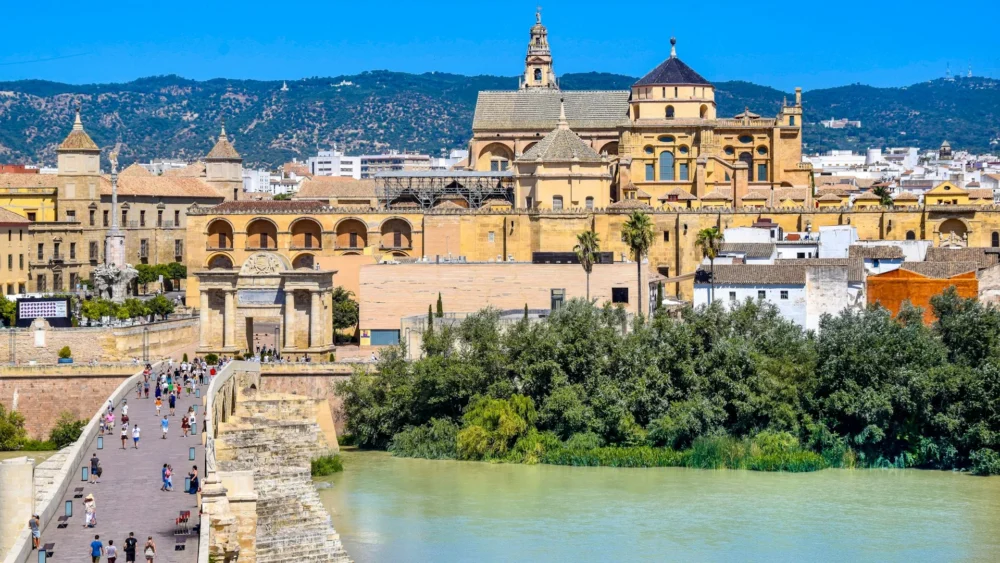
This is the landmark that defines Córdoba. It began as a mosque during the Islamic period and was transformed after the Christian conquest, creating an extraordinary complex that combines both traditions. Inside, hundreds of columns carry the distinctive red-and-white striped arches, and the ornate mihrab and mosaics sit beside a Renaissance cathedral built at the center.
Take your time and look closely at the details. An official guide can help explain the building’s layered history.
Tips
- Book through the official website.
- Arrive early to avoid the busiest periods.
- Dress modestly, because this is an active place of worship.
- A limited free-visit window has generally run Monday to Saturday from about 8:30 to 9:30 a.m., subject to religious events and access rules. Confirm it before planning around it.
- Address: Calle Cardenal Herrero, 1, 14003 Córdoba
- Admission: €15 per adult
- Hours: Vary by date and religious celebrations; check the official calendar
- Time needed: 1–2 hours
- Getting there: Bus lines 3 and 12 stop at Puerta del Puente
2. Take a trip to Medina Azahara
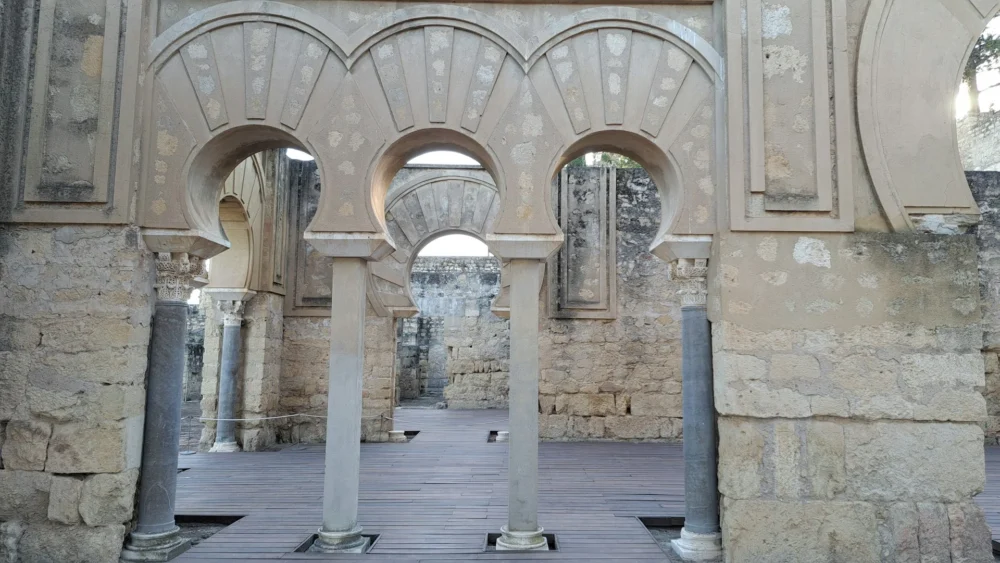
Medina Azahara is a UNESCO World Heritage archaeological city built in the tenth century under the Umayyad Caliphate of Córdoba. The site reveals the remains of a once-grand palace complex, and the interpretation center explains its political and cultural importance.
Because it lies outside the city, it needs more planning than anything else on this list. Confirm transport before you go; guided excursions are available if you prefer organized transport and commentary.
Tips
- Avoid the hottest part of the day in summer.
- Wear comfortable walking shoes.
- Allow time for the visitor center and the journey to the archaeological area.
- Address: Carretera de Palma del Río, km 5.5, 14071 Córdoba
- Admission: Check the official site for current conditions
- Hours: Seasonal. From September 21 to December 31, the published schedule generally runs Tuesday–Saturday 9 a.m.–6 p.m. and Sundays and public holidays 9 a.m.–3 p.m.; closure days and special openings apply
- Time needed: 2–3 hours plus travel
- Getting there: Use the official visitor transport from Córdoba, or go by car or taxi. Check the current shuttle timetable in advance.
3. Explore the Alcázar de los Reyes Cristianos
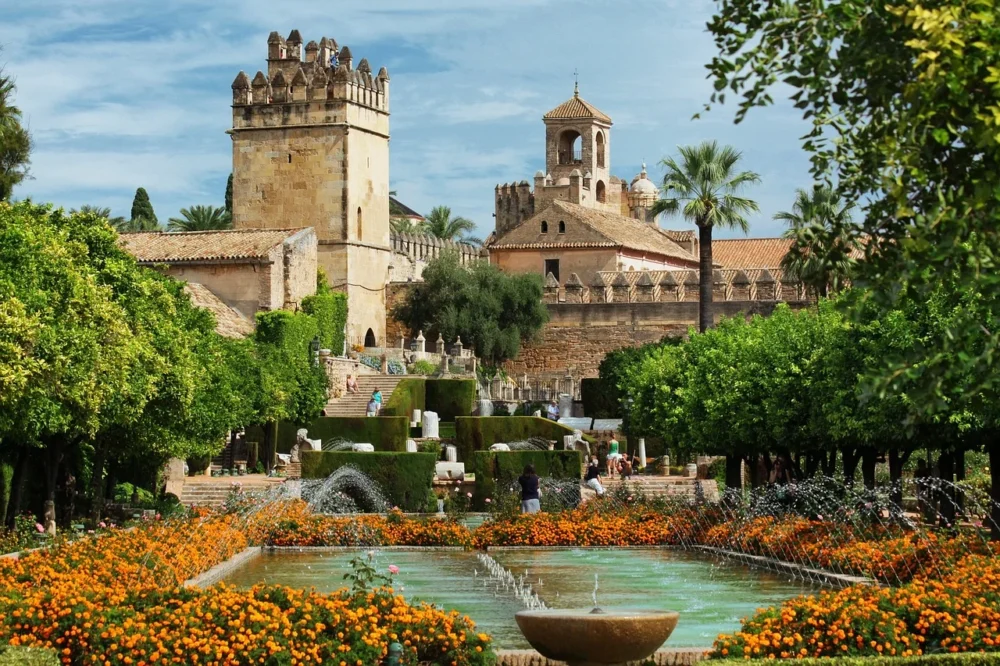
This fortress-palace is associated with the Catholic Monarchs, Isabella I of Castile and Ferdinand II of Aragon. Inside are historic rooms, defensive towers, archaeological remains, and landscaped gardens with fountains and pools that contrast with the fortress walls. Walk through the gardens instead of heading straight for the towers.
Tips: wear comfortable shoes for steps and uneven surfaces, and consider a guided tour for historical context.
- Address: Calle Caballerizas Reales, s/n, 14004 Córdoba
- Admission: Check the municipal ticket office for independent-visit prices; guided-tour packages have separate prices
- Hours: Seasonal; the complex generally closes on Mondays
- Time needed: 1–1.5 hours
- Getting there: 5–10 minutes on foot from the Mosque-Cathedral
4. Walk the Roman Bridge, Calahorra Tower, and the river
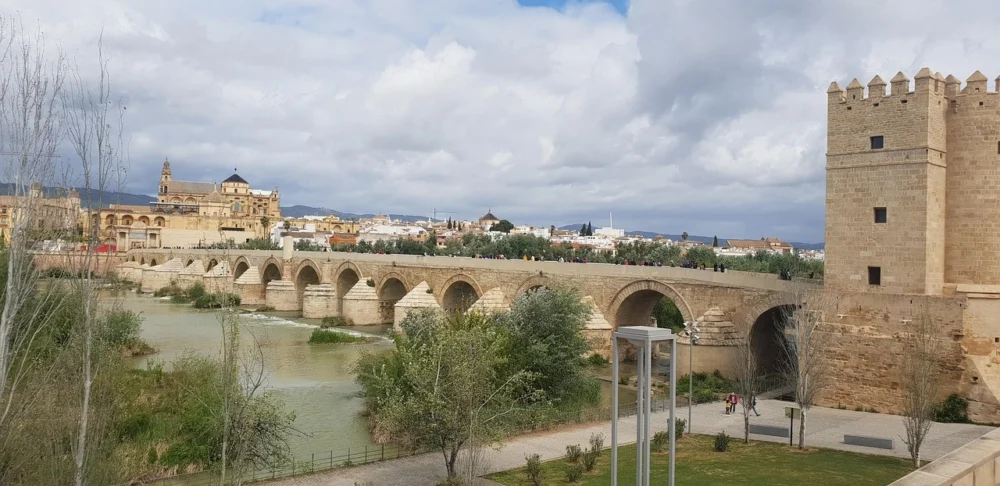
The Roman Bridge spans the Guadalquivir and links the historic center with the Calahorra Tower, a fortified gateway that once defended the approach to the city. The bridge has been modified over the centuries, but the setting remains the best place to take in Córdoba’s skyline. The tower now houses exhibitions on the relationships between Muslim, Christian, and Jewish communities.
Cross the bridge, then return along the riverbank for views of the arches reflected in the water and back toward the Mosque-Cathedral. Sunset is the best time, when the old town catches the evening light, and it is also one of the simplest free experiences in the city.
- Address: Puente Romano, over the Guadalquivir, Córdoba; Calahorra Tower at Puente Romano, s/n, 14009
- Admission: The bridge and riverside are free; the Calahorra Tower museum may charge, so check the current price
- Hours: The bridge and river paths are public; check the tower’s current visitor schedule
- Time needed: 30–90 minutes, depending on whether you enter the tower
- Getting there: 5–10 minutes on foot from the Mosque-Cathedral
5. See the Roman Temple
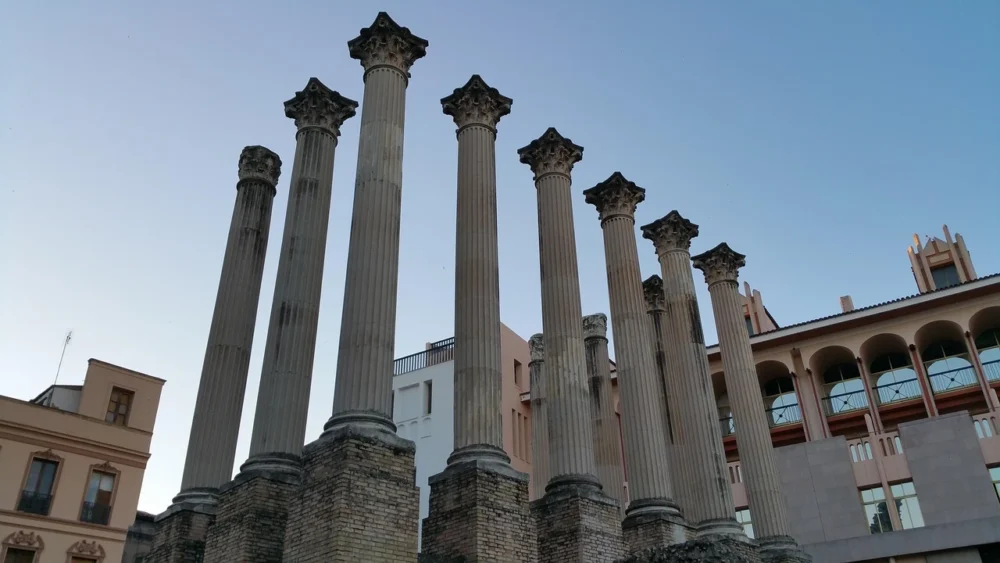
The Roman Temple is a reminder that Córdoba’s history reaches well beyond the Islamic and medieval periods. Reconstructed columns stand near the modern city hall and show the scale of Roman public architecture. Read the information panels, and combine the stop with Plaza de la Corredera and Plaza de las Tendillas.
- Address: Calle Capitulares, Córdoba
- Admission: The exterior can be viewed free of charge
- Hours: The outdoor remains can generally be seen from public areas
- Time needed: 10–20 minutes
- Getting there: 10–15 minutes on foot from the Mosque-Cathedral
6. Wander the Jewish Quarter and Calleja de las Flores
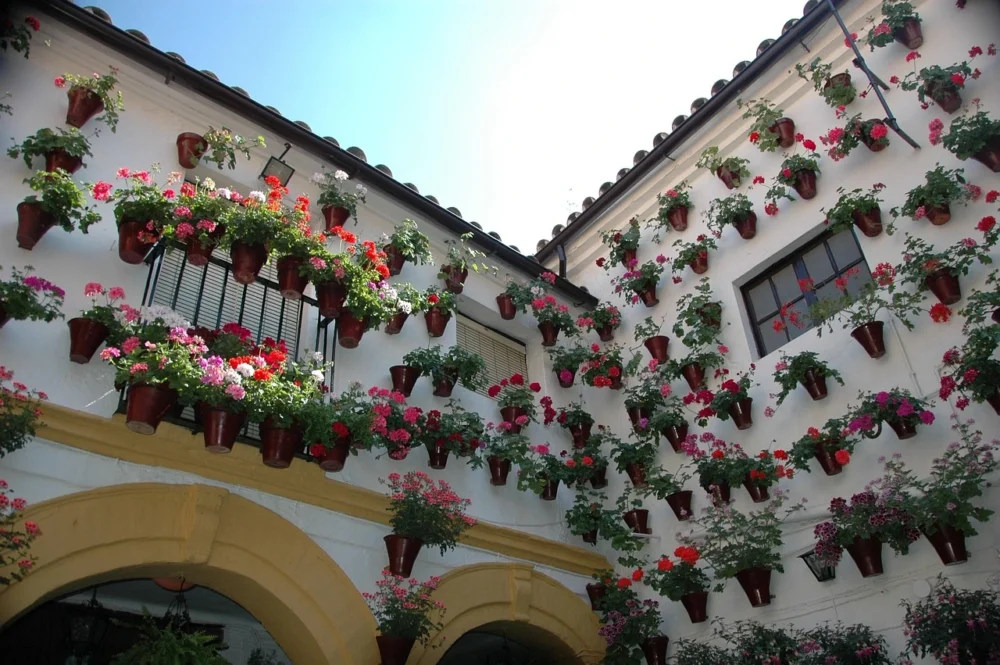
The Judería is one of the most atmospheric parts of Córdoba: a maze of narrow lanes, whitewashed houses, small courtyards, and traditional shops. Look for hidden squares, artisan workshops, flower-filled balconies, and patios, and don’t stick only to the busiest streets.
Calleja de las Flores is the most photographed lane, with flower-covered walls and a view toward the Mosque-Cathedral tower. It takes only 10–20 minutes. Go early for photos without crowds, and remember that it is a narrow public passage where people live.
- Address: Around Calle Judíos and the streets west of the Mosque-Cathedral; Calleja de las Flores is near Calle Velázquez Bosco
- Admission: Free to explore; individual monuments charge separately
- Hours: Public streets, generally accessible all day
- Time needed: 1–2 hours
- Getting there: Start near the Mosque-Cathedral and go on foot
7. Visit the Córdoba Synagogue

This small medieval synagogue is historically important. Its decorative plasterwork and Mudéjar details offer a glimpse of Andalusia’s Jewish heritage. The visit can be brief, but it is a key stop for anyone interested in Córdoba’s multicultural past. Check opening times first, particularly on public holidays.
- Address: Calle Judíos, 20, 14004 Córdoba
- Admission: Free for EU citizens; a small fee has applied for other visitors, so confirm the current conditions
- Hours: Seasonal and subject to heritage-site schedules
- Time needed: 15–30 minutes
- Getting there: In the Jewish Quarter, a short walk from the Mosque-Cathedral.
8. Discover the patios of Córdoba
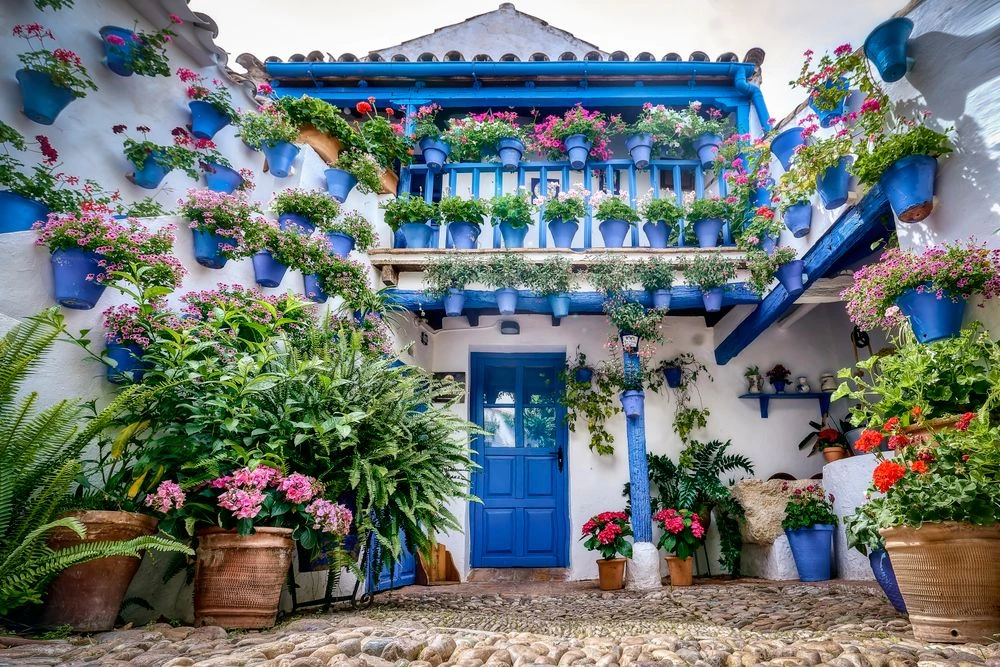
These private and communal courtyards, decorated with flowerpots, climbing plants, and fountains, are among Córdoba’s most distinctive features, and the tradition is recognized by UNESCO. The famous time to see them is the Patios Festival in May, when participating courtyards open and the city fills with flowers. Selected patios can also be visited outside the festival, but access and hours differ, so plan your route first.
- Address: Various locations across the historic center
- Admission: Many participating patios are free; arrangements vary by patio and event
- Hours: Depend on the patio. During the May festival, visiting periods generally include late morning and evening sessions
- Time needed: 1–2 hours, or longer during the festival
- Getting there: Walk between courtyards using the official visitor map
Tips: May is the most famous season and the busiest; be respectful when entering residential courtyards; check the official patio map for current access.
9. Stop at the plazas: Corredera, Potro, and Las Tendillas
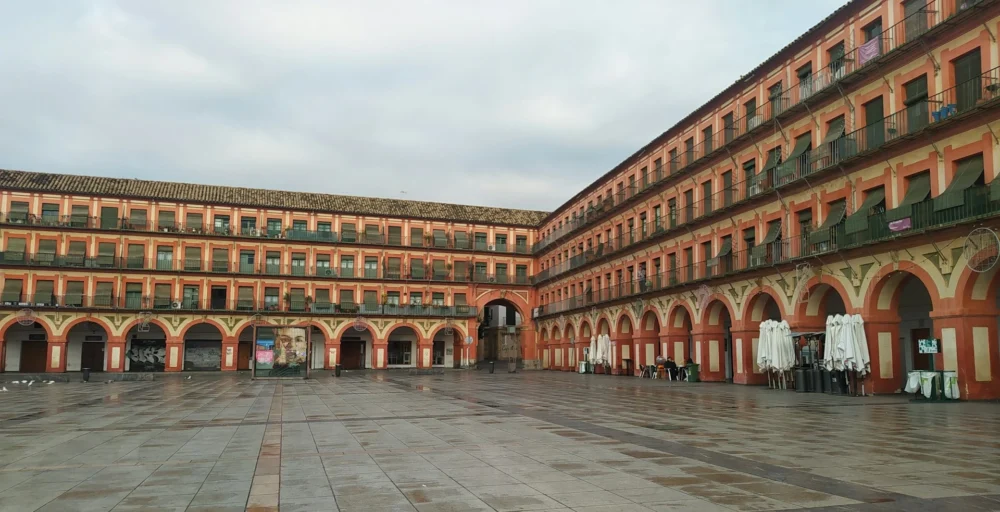
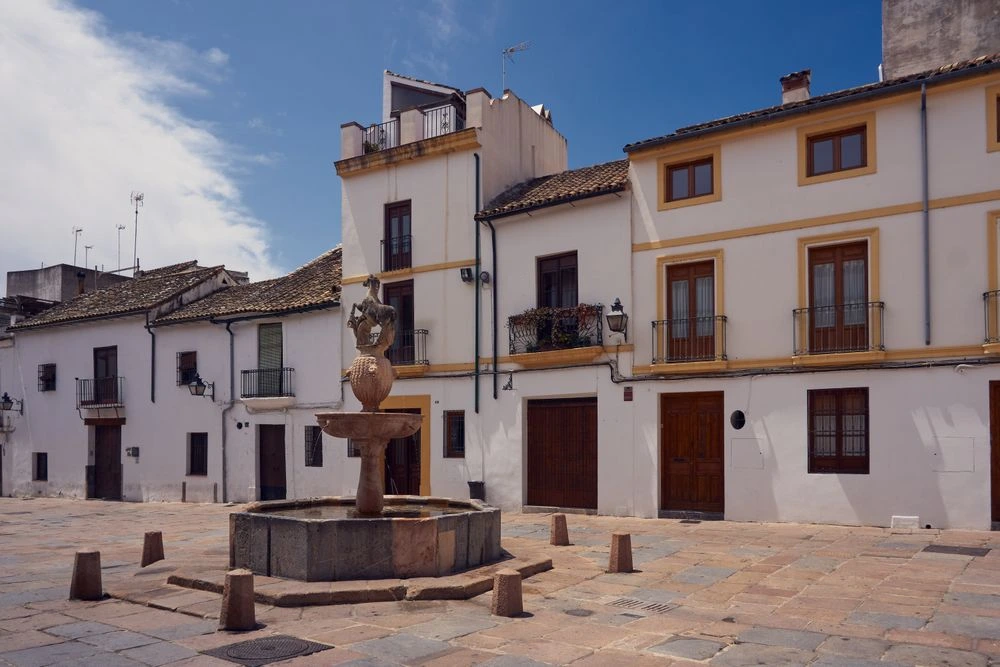

- Admission: Free (cafés and nearby museums have their own prices and hours)
- Time needed: 15–40 minutes each
- Getting there: 10–15 minutes on foot from the Mosque-Cathedral
Three squares are worth linking on a walking route, each with a different character:
- Plaza de la Corredera is a large rectangular square ringed by traditional arcades, unlike the tight medieval lanes nearby. It suits a coffee break by day and a livelier atmosphere in the evening.
- Plaza del Potro is a quieter historic square with a traditional fountain, and it leads to cultural attractions linked to Córdoba’s artistic heritage.
- Plaza de las Tendillas is the main modern central square, surrounded by shops and cafés. It makes a handy reference point between the old town and the newer city.
10. Explore Palacio de Viana

This elegant palace is celebrated for its twelve courtyards and gardens, each with its own character, tiles, fountains, and flowers. It offers a different view of Córdoba from the major religious monuments, and it suits garden, architecture, and photography lovers. With limited time, choose the courtyards; with more, the combined ticket adds a guided visit of the palace interior.
- Address: Plaza de Don Gome, 2, 14001 Córdoba
- Admission: €8.50 for the courtyards; €9 for a guided palace visit; €14 for the combined visit (second-half 2026 tariff)
- Hours: September–December 2026: Tuesday–Saturday 10 a.m.–7 p.m.; Sundays and public holidays 10 a.m.–3 p.m.; normally closed Mondays. Special holiday hours apply
- Time needed: 1–1.5 hours
- Getting there: 15–25 minutes on foot from the Mosque-Cathedral
11. Visit the Archaeological Museum

The museum presents artifacts from Córdoba and the surrounding region, from antiquity to the medieval era. It is an excellent stop for understanding the history behind the monuments you have seen, especially if you enjoy Roman sculpture and archaeological finds. Check the official listing for current hours and temporary exhibitions.
- Address: Plaza de Jerónimo Páez, 7, 14003 Córdoba
- Admission: Check the official museum for ticket conditions and free-admission eligibility
- Hours: Seasonal; generally closed Mondays
- Time needed: 45–90 minutes
- Getting there: 10–15 minutes on foot from the Mosque-Cathedral
12. Walk through the Royal Botanical Garden
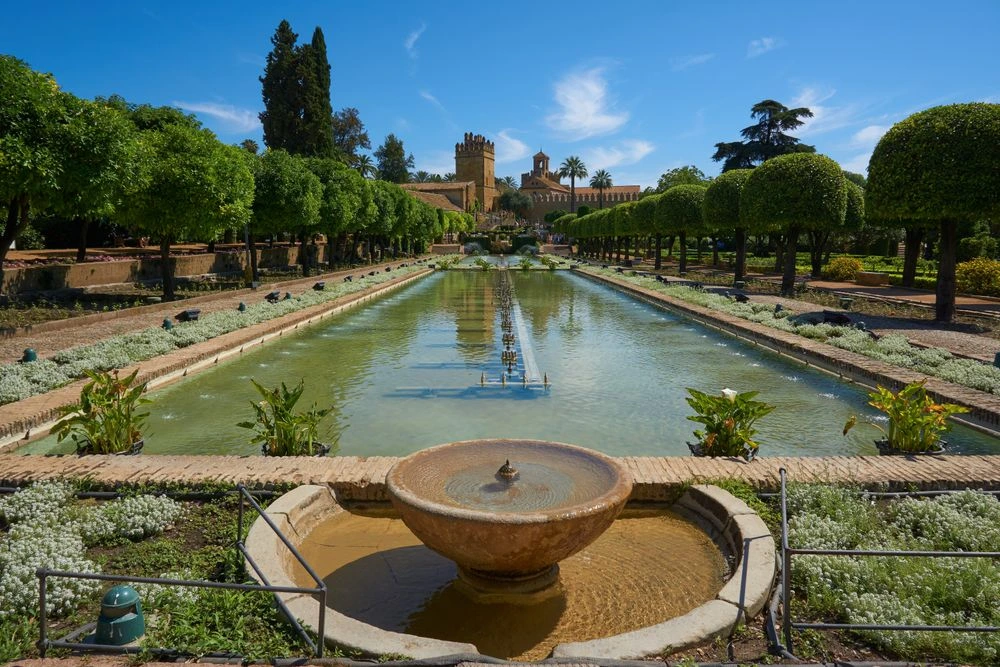
A quieter alternative to the crowded historic streets, with plant collections and green spaces that suit a slower pace. It is a good break between monuments and museums, but check opening times before traveling specifically to visit, because seasonal schedules can differ from city-center attractions.
- Address: Avenida de Linneo, s/n, Córdoba
- Admission: Check the current official tariff
- Hours: Seasonal and subject to maintenance or special closures
- Time needed: 45–90 minutes
- Getting there: On foot, or by local bus or taxi from the historic center
13. Try Córdoba’s traditional food

Start with salmorejo, a chilled tomato-based cream traditionally garnished with egg and cured ham. Also look for flamenquín, local cheeses, cured meats, and seasonal tapas, plus traditional Andalusian sweets for dessert. Menus and recipes vary, so ask about ingredients if you have dietary requirements. Try a few small dishes at different venues rather than one big meal. For more dishes, see our Andalusian Food Guide.
- Where: Restaurants and tapas bars throughout the historic center
- Cost: Depends on the venue and your order
- Hours: Most places serve lunch and dinner; schedules vary
- Time needed: 1–2 hours
- Getting there: The Jewish Quarter, Plaza de la Corredera, and the central streets are convenient areas
14. Eat at Mercado Victoria

A food market where you can sample several dishes in one place, handy if you want Andalusian flavors without a long restaurant meal. Look for salmorejo, local cheeses, cured ham, and tapas (availability varies by stall). Go around lunchtime and compare a few small dishes instead of ordering everything at once.
- Address: Jardines de la Victoria, Paseo de la Victoria, Córdoba
- Admission: Free entry; food and drinks are paid separately
- Hours: Stalls and the venue run on their own schedules; check the current timetable
- Time needed: 45–90 minutes
- Getting there: 15–20 minutes on foot from the Mosque-Cathedral
15. Relax in a hammam

A hammam is a relaxing break after a day of sightseeing, with warm baths and treatments inspired by the region’s bathing traditions. Compare facilities, treatment options, session length, and cancellation terms before booking, and choose a venue within walking distance of your hotel or the old town.
- Address: Depends on the venue you book, in the historic center
- Admission: Paid; prices vary by treatment, duration, and package
- Hours: By appointment
- Time needed: 1–2 hours
How to get to Córdoba
- By train: Córdoba’s high-speed station connects with Seville, Málaga, and Madrid. Journey times and fares depend on the service and booking date. Timetables: https://www.renfe.com/
- By bus: Local buses cover the station area and the center, but walking is often easier once you reach the historic quarter. Local operator: https://www.aucorsa.es/
- By car: Useful for the wider region, but not essential for the center. Historic streets are narrow and parking near the monuments can be limited.
- By organized tour: Convenient from Seville or Málaga if you want transport and sightseeing arranged together.
Best time to visit Córdoba
- Spring (March–May): Pleasant for walking and for the patios. May is very popular, so book accommodation and tours early.
- Summer (June–August): Temperatures can be extremely high. Visit outdoor sights early or late, drink water often, and check for reduced summer hours.
- Autumn (September–November): A good time for sightseeing without the peak spring crowds.
- Winter (December–February): Often quieter, but check opening hours and daylight before planning a packed day.
Where to stay
For a first visit, stay in or near the historic center, within walking distance of the Mosque-Cathedral, the Jewish Quarter, and the Roman Bridge. If you arrive by train for a short stay, weigh the convenience of the station area against the atmosphere of the old town.
How many days do you need?
- One day: Mosque-Cathedral, Jewish Quarter and Calleja de las Flores, the Alcázar area, the Roman Bridge, and a local meal.
- Two days: Add Palacio de Viana, a museum, the patios, and more time for food.
- Three days: Add Medina Azahara and other attractions beyond the central walking route.
Suggested one-day itinerary
| Time | Activity |
|---|---|
| 9:00 a.m. | Mosque-Cathedral (subject to the day’s opening schedule) |
| 10:30 a.m. | Jewish Quarter and Calleja de las Flores |
| 11:30 a.m. | Córdoba Synagogue, if open |
| 12:15 p.m. | Alcázar de los Reyes Cristianos, if tickets and hours permit |
| 1:30 p.m. | Lunch: salmorejo and tapas |
| 3:00 p.m. | Plaza de la Corredera and the Roman Temple |
| 4:00 p.m. | Plaza del Potro or a nearby museum |
| Before sunset | Roman Bridge and the riverfront |
Frequently asked questions
Is Córdoba worth visiting?
Yes. It combines remarkable architecture, Roman and medieval history, traditional Andalusian food, and a walkable center, and it fits well into a southern Spain trip.
Can you visit Córdoba as a day trip from Seville?
Yes, high-speed trains make it possible. Book transport in advance and reserve a timed Mosque-Cathedral entry if available. An overnight stay lets you go more slowly.
Is the Mosque-Cathedral free to enter?
Standard adult admission is listed at €15 on the official website. A limited early-morning free window has generally run Monday to Saturday, subject to religious events. Check the official schedule first.
Are Córdoba’s patios free?
Many participating patios are free. Access and hours vary, especially outside the May festival, so check the official patio website.
Can you explore Córdoba without a car?
Yes. The main historic attractions are within walking distance of each other. A car is mainly useful for destinations outside the city.
What is the best month to visit Córdoba?
Spring and autumn are generally best for comfortable sightseeing. May is especially popular for the Patios Festival, while summer can be extremely hot.
How much does a visit to Córdoba cost?
It depends on paid monuments, tours, meals, and transport. Several highlights are free, including the Roman Bridge, Calleja de las Flores, the public squares, and many patios. Check current prices for the paid attractions you plan to visit.
Final thoughts
Córdoba is one of Andalusia’s most rewarding destinations, with a rare mix of architectural heritage, historic streets, beautiful courtyards, and local food. Start with the Mosque-Cathedral and the Jewish Quarter, cross the Roman Bridge, and leave time for quieter corners. If your schedule allows, add Palacio de Viana and Medina Azahara.
Before you travel, verify ticket prices, hours, and transport through the official links above.
Planning a longer Andalusia trip? Continue with our guides to Seville, Granada, Málaga, and the 7-day Andalusia itinerary.